How to Make Pizza in Pizza House Simulator
The station-by-station line that turns flour into a ticket the dining room will actually pay for.
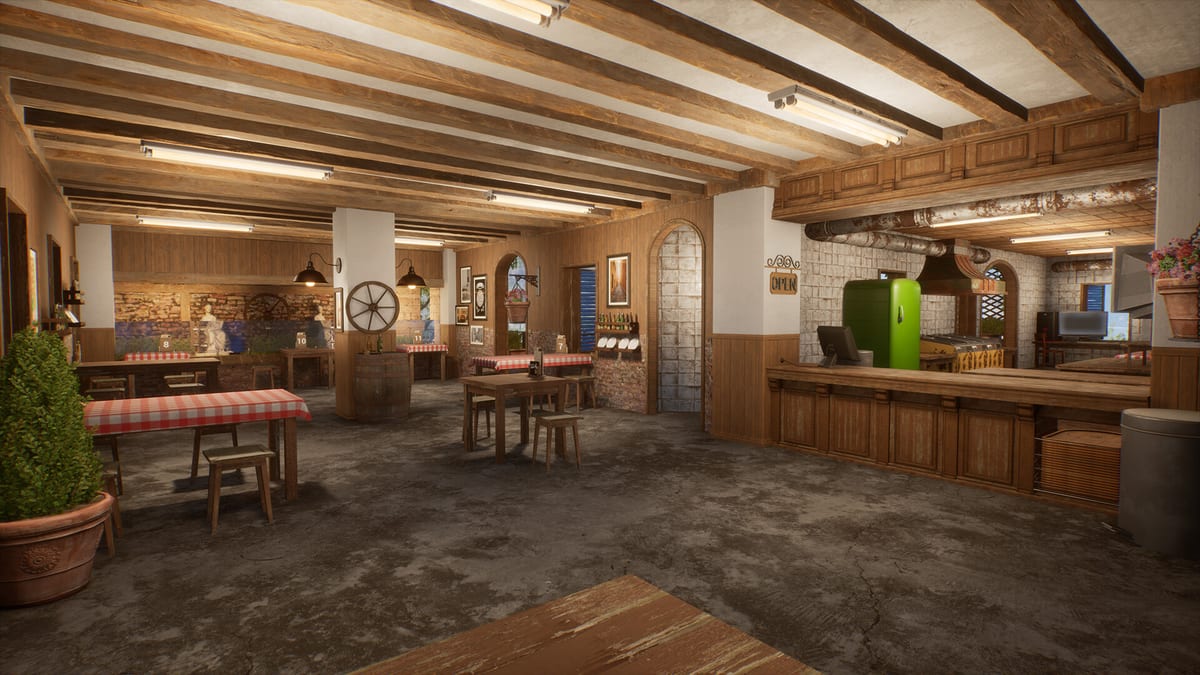
Every other system in Pizza House Simulator is downstream of a pie that left the stone on time. This guide is the cooking loop for the Steam release that landed on 19 August 2026. It builds on Getting Started and stays honest about what the developers published: you prepare ingredients, stretch dough by hand, manage the oven, repair stations, and keep impatient guests from walking. We will not invent gram charts. We will tell you how to think at each station so rush hour does not turn into a bin of charcoal.
Station map before the first ticket
Walk a rectangle: dry goods, wet goods, stretch, sauce, toppings, oven, pass, trash, repair. The freezer and cold area matter more than they look; later patches added a cold-area mark on the freezer door because owners kept losing time hunting it. Empty dough, oil, and sauce-powder containers now show a depleted look. If the mesh looks empty, restock. Do not keep scooping air.
Recipes live in a manage-recipe panel in the demo-era loop, and the full game still expects you to cook what was ordered, not a house special you invented because mozzarella was closer. Pin the ticket. A portable order tablet from the demo-era patch lets you carry that list to the oven or the counter so you are not glued to a wall screen. Call toppings out loud in co-op so two people do not double-pepperoni the same skin. Role split is in the co-op role planner.
Dough, sauce, toppings
Dough is a craft, not a click. Stretch on the board until the skin is even. Thick edges bake late and burn while the center is raw. Thin patches tear when you peel. Make one good skin, not three panic skins.
Sauce belongs inside the crust line. An even coat tastes like a shop; a puddle in the middle tastes like a spill and slow-cooks the center. Toppings follow the ticket. Overloading cheese looks generous and wrecks bake time. If the order is simple, keep it simple. The recipes page is the catalog mindset—what kinds of pies the line must be ready for—not a fake spreadsheet of hidden stats.
Oven discipline
The oven is the bottleneck that ends friendships. Load with a peel, watch the window, rotate if the build asks you to, and pull when the crust is done, not when the next ticket is screaming. A burnt pie is a longer delay than a pie that waited ten extra seconds on the board. If the stone is full, stop stretching. The board is a queue; the oven is the clock.
Repair is part of cooking. A coughing oven during dinner is how fires start, and fires are a listed disaster. Park the next skin, fix the station, then resume. How to Survive Disasters covers the ugly outcomes. Kitchen Automation is how you eventually stop being the only timer.
Pass, plates, and the dining room
A finished pie that sits on the pass is a cooling ticket. Call the table number, walk it, reset. Money on the counter sits on a ledger in later builds so payouts are readable—glance, do not freeze. If you are solo, assistants will eventually cover walking. If you are in a six-player lobby, the floor person owns plates and bins. Do not make the oven chef also bus tables unless the lobby is two people.
Trash fills faster than new owners expect. A full bin in a tight kitchen is a pathing trap. Empty on a lull, not after someone is already stuck. The demo video in the middle of this page is a Next Fest let’s play of that early cooking loop. Use it to see the rhythm, then come back to this checklist during a real shift.
Practice order that actually sticks
Run a silent lunch with one recipe family. Then add a second ticket type. Then add a broken station on purpose so you feel the repair tax. Only then invite friends or turn on viewer drop-ins from Twitch and Kick. Spend cash using kitchen upgrades when you can name the bottleneck in one sentence. If you cannot name it, you are not ready to shop.
Return to the Guides Hub when you need a different how-to. For a first-day paper list, use the first-shift checklist. Official purchase and demo links remain on the Links Hub.
Frequently Asked Questions
Quick answers drawn from the kitchen loop, co-op lobbies, and economy systems.
Why do my pizzas burn while the next ticket waits?
You stretched more skins than the oven can hold. Stop the board, respect bake time, then resume. Automation helps later, not on the first lunch.
Should I memorize every recipe on day one?
No. Pin the ticket and cook what was ordered. Use the recipes page as a lineup overview, not as homework before your first close.
Is the demo loop the same as the full game?
The demo taught cooking and service. The full Steam release adds automation, deeper upgrades, disasters, and economy. The hands still do dough, sauce, and oven.